Hot Water Slab Leak Repair in Kenner, LA
More than seventy percent of pressurized sub-foundation pipe failures involve the domestic hot water plumbing network. When hot water lines fail underneath a monolithic concrete slab, the consequences can quickly escalate from elevated utility bills to warped flooring, foundation dampness, and severe water heater fatigue. If you need specialized hot water slab leak repair Kenner services, understanding the physics behind thermal stress and having access to rapid diagnostic tools is vital.
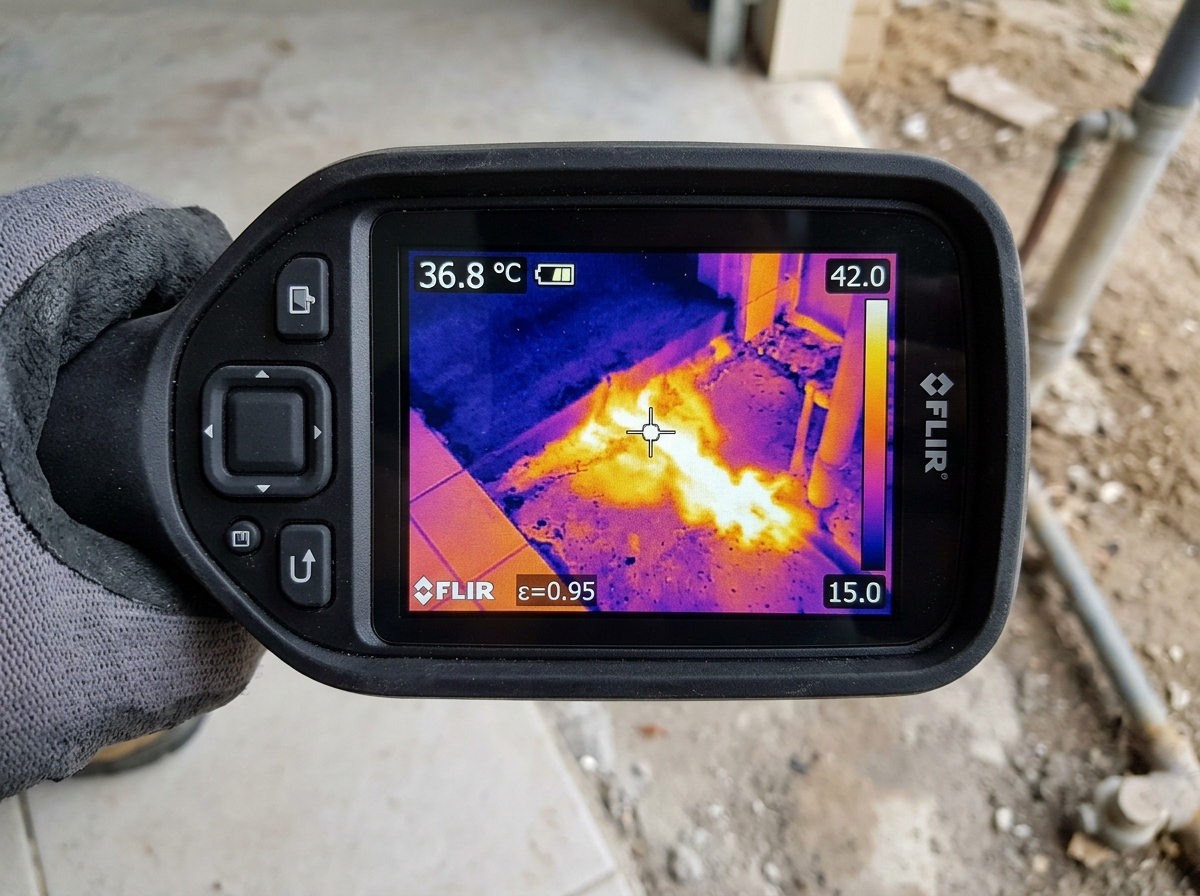
A hot water line leaking beneath concrete wastes energy and compromises flooring adhesives. Contact our team to stop active hot-side water loss.
Why Hot Water Lines Fail First Under Foundations
Sub-slab copper supply lines are buried directly beneath concrete in heavy clay soils. While cold water lines experience relatively stable ambient soil temperatures, hot water lines endure constant cycles of thermal expansion and contraction. Every time a shower is run or a dishwasher cycles, hot water causes the copper pipe to expand lengthwise. When the flow stops, the pipe cools and contracts.
Over thousands of thermal cycles, this mechanical movement causes the outer surface of the copper pipe to abrade repeatedly against jagged aggregate, foundation rebar, and dense soil particles. Combined with the high temperature of the water which accelerates chemical corrosion reactions from the inside, hot water lines develop thin spots, stress cracks, and pinholes far sooner than cold lines. This leads to a persistent hot water line leak under slab Kenner homeowners often first notice when walking barefoot through hallways or kitchens.
Hallmark Symptoms: Warm Floors and Constant Water Heater Cycling
Hot-side slab failures produce distinctive warning signals that differentiate them from standard plumbing issues:
- Warm or hot floor areas: A localized warm spot on floor Kenner homes experience, especially on porcelain tile, vinyl plank, linoleum, or bare concrete, is the clearest indicator of an escaping hot water plume heating the slab from beneath.
- Water heater running constantly: You may notice your water heater running constantly Kenner utility bills reflect. Because hot water continuously escapes under pressure, the tank burner or electric heating elements remain locked on 24 hours a day to heat incoming makeup water.
- Spiking gas or electric bills: Sudden, unexplained jumps of fifty to one hundred dollars or more on monthly energy bills occur as water heaters work without pause.
- Reduced hot water capacity: Showers run lukewarm or run out of hot water in minutes because a portion of hot water volume is continuously lost under the home.
- Floor covering failure: Heat and moisture rising through concrete can melt carpet adhesives, cup engineered hardwood planks, or cause vinyl tiles to bubble and lift.
Continuous water heater operation can burn out heating elements and waste hundreds of gallons daily. Call now to speak with a technician.
Thermal Imaging and Acoustic Pinpointing
Because hot water transfers thermal energy upward through concrete, forward-looking infrared (FLIR) cameras provide an ideal non-invasive diagnostic method. High-resolution thermal sensors clearly display temperature gradients across the floor, highlighting the brightest heat signature directly above the pipe rupture. Plumbing technicians verify this visual evidence using acoustic ground listening probes, cross-referencing surface heat with subterranean sound frequencies. This double-verification method ensures the leak is confirmed before any repair plan is finalized. If you want to know more about the full diagnostic sequence, visit our slab leak detection in Kenner page.
Repair Options: Spot Repair Versus Overhead Hot-Side Reroute
When addressing a hot water slab leak, homeowners generally evaluate two primary solutions:
Direct Concrete Spot Repair
Direct repair involves cutting a small rectangular access port through finished flooring and concrete directly over the confirmed break. The failed copper is excavated and replaced with heavy-duty Type L or K copper with brazed fittings. However, because thermal stress affects the entire run, spot repairing a single pinhole in an aged hot line may leave other weakened sections vulnerable to future failure.
Overhead Hot-Side Reroute (Recommended)
The modern, non-destructive standard is an overhead hot-side reroute. The leaking sub-slab line is capped off at the water heater and at the fixture manifold, leaving it permanently abandoned under the concrete. A new, seamless PEX line is routed up through walls and across the attic space, feeding hot water directly from above without touching your flooring. Learn how this works on our slab leak reroute page.
If your home has suffered multiple hot-line failures over several years, exploring whole-house repiping may be the most cost-effective long-term safeguard. Learn more about comprehensive sub-slab plumbing restoration across our entire service area on our main slab leak repair in Kenner homepage, or review regional considerations on our service areas page.
Frequently Asked Questions About Hot Water Slab Leaks
Can a hot water slab leak damage my water heater?
Yes. Because heated water escapes non-stop, tank-style water heaters fire continuously without normal resting cycles. This causes premature element burnout, excessive sediment baking at the bottom of the tank, and burner wear, significantly shortening unit lifespan.
What should I do while waiting for a plumber?
Turn off the dedicated cold water shutoff valve on the supply pipe entering the top of your water heater, and switch off the heater circuit breaker or gas control valve. This stops hot water from feeding into the leaking slab line while keeping cold water available to your toilets and cold faucets.
Will an overhead PEX reroute handle hot water safely?
Yes. Commercial-grade PEX-a piping is certified for domestic hot water operating up to 180 degrees Fahrenheit at 100 PSI, far exceeding typical residential plumbing demands, while resisting thermal expansion stress and scale buildup.