Slab Leak Detection in Kenner, LA
Pinpointing a subterranean water leak beneath a solid poured concrete foundation requires scientific precision, specialized instrumentation, and a deep understanding of local building construction. In Kenner, where residential foundations rest on wet, shifting alluvial subsoils near Lake Pontchartrain, blind demolition can cause severe and unnecessary structural damage. Our high-accuracy slab leak detection Kenner procedures isolate concealed water loss with surgical clarity, eliminating destructive trial-and-error digging.
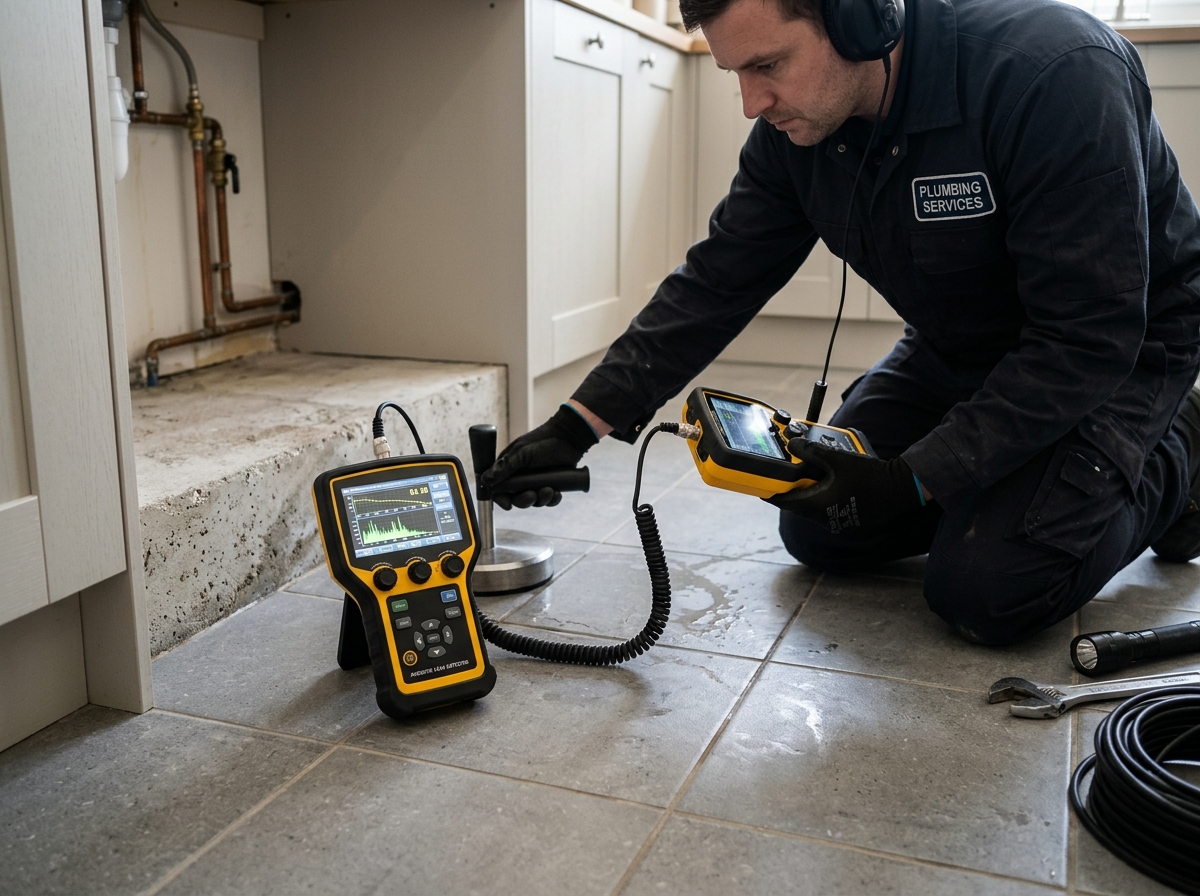
Avoid cutting into your finished floors blindly. Speak with an experienced local technician for accurate electronic acoustic leak verification.
Initial Warning Signs and Simple Water Meter Testing
Before scheduling specialized diagnostic testing, homeowners can observe several early indicators of subterranean failure. If your water heater runs continuously without anyone taking a shower, or if you feel distinct warm tiles beneath your feet in a hallway or bathroom, sub-slab supply lines may be compromised.
A straightforward first verification step is the municipal water meter test. Ensure every faucet, fixture, ice maker, and garden hose bib in your home is shut off tight. Walk out to your parish water meter box located near your front property line. Check the low-flow dial (often shaped like a small triangle or star) or monitor the digital cubic-foot counter. If the dial rotates or numbers advance when no fixtures are operating, pressurized water is escaping somewhere in the system.
Isolating Hot Versus Cold Domestic Lines
Once a continuous draw is confirmed, the next phase of professional leak under slab detection Kenner is establishing whether the failure resides in the cold water delivery or the domestic hot water network. The technician installs precision pressure gauges at exterior testing ports or washing machine connections and isolates the water heater shutoff valve. If pressure on the domestic cold side holds completely steady while the hot side depressurizes rapidly, the breach is isolated to the hot line run. This crucial step narrows the search radius by half before acoustic equipment is unboxed.
Non-Invasive Diagnostic Technologies
Modern electronic leak detection Kenner relies on multiple non-destructive modalities to trace concealed piping runs and verify the exact point of discharge:
Acoustic Ground Microphones
Water escaping under municipal pressure creates distinctive vibrational frequencies as it sprays against surrounding aggregate and concrete. Sensitive piezoelectric ground microphones amplify these sound waves, allowing the technician to hone in on the precise decibel peak through tile, hardwood, and concrete.
Thermal Infrared Imaging
For hot-water supply lines, high-resolution thermal imaging cameras detect subtle surface temperature differentials. The warm water pooling beneath the concrete illuminates clearly on thermal screens, outlining the subterranean pipe trajectory and pinpointing the rupture point.
Electromagnetic Line Tracing
Plumbing technicians induce a low-frequency radio signal directly onto metallic copper pipe runs. A handheld receiver then traces the exact path and depth of the pipe through the foundation, ensuring accurate location mapping before any access is planned.
Why Accurate Pinpointing Protects Your Foundation
Performing a comprehensive slab leak test Kenner ensures that concrete disruption is kept to an absolute minimum. In older building methods, inexperienced contractors might break open large sections of foundation across several rooms hoping to find a damaged copper joint. In Kenner's soft clay soils, creating extensive trenches through concrete slabs weakens structural rebar and load-bearing integrity. Pinpoint detection allows the plumber to either perform a surgical, single-tile opening or determine whether an overhead bypass is the superior option for permanent slab leak repair in Kenner.
Accurate acoustic location prevents unnecessary jackhammering. Contact our diagnostic team today to schedule an evaluation.
What the Written Diagnostic Leak Report Includes
Upon concluding electronic testing, the homeowner receives a detailed written diagnostic report. This document is essential for evaluating repair options and provides critical documentation for property insurance adjusters. The written report typically details:
- Static and dynamic system water pressure readings in pounds per square inch (PSI).
- Specific line identification (hot water domestic supply, cold main trunk, or fixture riser).
- Exact spatial location of the detected acoustic peak marked on a floor plan diagram.
- Thermal imaging thermograms showing subterranean heat plumes under floors.
- Moisture meter readings taken along adjacent baseboards and subfloor materials.
- Recommended restoration pathways, comparing direct spot access against an overhead slab leak reroute or complete whole-house repiping.
To learn more about how diagnostic reports assist with property claims, review our dedicated guide on slab leak insurance help. If you live near Lake Pontchartrain or the airport corridor, consult our Kenner service areas page for regional foundation context.
Frequently Asked Questions About Slab Leak Detection
How loud is the sound of a slab leak under concrete?
To the human ear, a slab leak may sound like a faint hiss or constant rushing water in walls or empty rooms. In many cases, human hearing cannot detect it at all through thick concrete and tile, which is why specialized electronic microphones that filter background room noise are necessary.
Can slab leak detection equipment damage my floors?
No. All our diagnostic tools—including acoustic sensors, infrared thermal cameras, and electromagnetic transmitters—are 100 percent non-invasive. No holes are drilled or floors disrupted during the detection phase.
How long does a thorough leak detection appointment take?
A comprehensive slab leak diagnostic assessment generally takes between one and three hours, depending on home square footage, pipe depth, plumbing complexity, and whether both hot and cold lines require isolation.